← All periods

1651 to 1700

79 works

A garden with two fountains stretches back to a manor house in the distance in this horizontal landscape painting. The horizon comes about a third of the way up the composition, and gray clouds tower in the vivid blue sky above. A pine tree closer to us to the left of center rises high against the sky. There are a few more evergreens to the right among dark-green canopied trees. A yellowed pine tree has fallen on the grassy lawn in the lower left quadrant of the composition. Just beyond this, the fountain to the left has a tall, columnar base under a dish-like basin. Water fountains sprays up and out from the center of the dish and trickles down the sides. The fountain is topped with a statue, perhaps of a child. Three people stand at the base of this fountain, which is three times their height. The fountain to the right has a blocky base about the height of a person. Water streams out from the front and two sides in this view. On the base is an urn-like form that shoots water high into the air. Five more people stand, run, or walk across the garden between the fountains. The women’s long dresses have red, white, or black skirts and pale pink or black bodices. Two wear black head coverings, and the third wears a white head covering. One man wears brown and the other black, and both have wide-brimmed hats. Near the right edge of the painting, three more people wearing black stand around an arched opening that appears to be covered in moss and/or other plants. The people all appear to have light skin but not all faces or hands are visible. A broken column lies in the bushes in the lower right corner of the composition. The final person stands entirely in shadow in the distance between two rows of trees that flank an opening to the house. The structure appears to have two tall stories with four chimneys on the dark green-gray roof and light brown walls. Angular bays of windows are outlined with white trim on the symmetrical façade.

Country House in a Park

Ruisdael, Jacob van

The image portrays a seascape with two ships. The sea appears tumultuous, with the viewpoint suggesting a slightly elevated position above the waves. The horizon is obscured, blending sea and sky. A castle-like structure is visible in the distance on a rugged cliff. The brushstrokes are detailed, depicting billowing sails and swirling waves. The color palette is predominantly greenish blues and grays, emphasizing the stormy weather.

Shipping Scene from the Collection of Lawrence Fashion

Kirkall, Elisha

Rectangular Vase

Rectangular Vase

Chinese Qing Dynasty

The image displays a large, rectangular expanse of solid blue with a subtle texture. In the upper left corner, the word "Beich" is inscribed in a classic, cursive script style. The overall presentation resembles a minimalist book or notebook cover, with the plain blue field covering most of the image.

Landscapes in the Manner of Poussin

Beich, Joachim Franz

Baluster Vase

Baluster Vase

Chinese Qing Dynasty

The image shows a tall vase with a smooth, rounded body that tapers towards an elongated neck, culminating in a flared rim. The vase has a soft pinkish-red color with speckles and a white accent at the rim and base. It is placed against a gray background.

Amphora Vase

Chinese Qing Dynasty

The painting shows a scene from an elevated point of view. At the bottom of the painting, a group of people walk or ride along a wide dirt path. Several of the people sit in a covered horse-drawn wagon. Two women walk next to the wagon, while a man stops to tie his shoe. To the left of the wagon, two people speak together, one of whom wears a large pack on their back. Many of the people are dressed in bright shades of blue, red, and pink. On the left side of the image, along the dirt path, are two large buildings with orange roofs. Behind the path is a body of water, on top of which float two boats with more people in them. On the other side of the water, trees and buildings line a hill that slopes upwards, continuing far off into the distance. At the bottom of the image, the colors are mostly earthy browns and greens, while the distant landscape is painted in light greens and blues, under a blue sky filled with soft, fluffy clouds.

River Landscape with Villages and Travelers [verso]

Anonymous Artist

The image is a drawing of a person from the waist up. The person is in a pose with both arms raised above their head, showing the torso. The face is slightly tilted upward in a profile view with defined facial features and curly hair. The person is not clothed, highlighting the body's contours, musculature, and shading. There are no accessories or visible objects, and the background is minimalistic, emphasizing the central figure through shading and lines.

A Male Herm

Canuti, Domenico Maria

The sculpture is a medallion featuring a highly detailed coat of arms at its center. The circular design showcases heraldic symbols including shields and patterns enclosed by decorative drapery. Surrounding the coat of arms is a Latin inscription running along the edge of the medallion. The material of the sculpture appears to be metal, with a bronze or copper-like color. The textural details and raised relief of the symbols suggest careful craftsmanship in its creation, highlighting its historical or heraldic significance.

Shield of the Arms of Croy and Arschott [reverse]

German 17th Century

The sculpture is a small, round container with a lid. It has a red color with areas of lighter patches. The material appears to be ceramic or porcelain, with a smooth, polished surface. It is similar in size and shape to a compact or trinket box and rests on a flat surface.

Covered Box for Seal Paste

Chinese Qing Dynasty

Abraham Entertaining the Angels [recto]

Abraham Entertaining the Angels [recto]

Rembrandt van Rijn

The sculpture depicts a figure with almond-shaped eyes and a closed mouth, adorned in a robe with colorful floral patterns. The hands are held together at the front, with a shawl draped over the shoulders. The head is topped with a dark headdress. Made from glossy ceramic material, the sculpture has a polished sheen, enhancing its design. The textures and colors create a decorative appearance, presenting the figure as elegant and traditionally crafted.

Guanyin, the Bodhisattva of Compassion

Chinese Qing Dynasty

This is a photograph of a vase with a dragon motif. The vase is ornately decorated with a dragon design that wraps around its body. The background has swirling cloud-like patterns in shades of green, yellow, black, and white. The dragon is detailed with scales rendered in gold and yellow. Its body weaves across the surface, and its head has a fierce expression with white protruding eyes and long tendrils. The vase has a wide mouth and a rounded base, showcasing an elegant silhouette.

Baluster Vase

Chinese Qing Dynasty

The sculpture depicts a hexagonal vase with floral motifs. The vase is adorned with blossoms in pink, white and green colors set against a yellow backdrop. It is made of glazed ceramic material with a white rim on top featuring a red crisscross pattern. The floral patterns are evenly spaced around the surface, creating a harmonious and balanced look.

Hexagonal Trumpet Beaker Vase

Chinese Qing Dynasty

Insignium Rome Templorum Prospectus Exteriores Interioresque...; Disegni di Vari Altari e Cappelle Nelle Chiese Di Roma...

Insignium Rome Templorum Prospectus Exteriores Interioresque...; Disegni di Vari Altari e Cappelle Nelle Chiese Di Roma...

Rossi, Giovanni Giacomo de

The image depicts a man seated and facing the viewer. He has a long, pointed beard and wears a tall headpiece. His head is slightly turned to his left. The man has deep-set eyes, a prominent nose, and a calm expression. He is wearing a long robe-like garment and a mantle or wide sash. The portrait is framed within an oval with a decorative border. In the top left corner, there is a crest with a coat of arms containing three symbols. The background features diagonal hatched lines, creating texture. The image appears to be engraved.

Aluaso Semedo

Moncornet, Balthasar

This is a ceramic vessel with a rounded, dome-like shape and a small, narrow opening at the top. The right half of the vessel is predominantly covered in red glaze, while the left side is a lighter cream color. The red glaze is patchy in some areas, showing the cream area underneath. The surface features an embossed design resembling swirling clouds or waves.

"Beehive" Water Pot

Chinese Qing Dynasty

The image shows a person standing upright. The individual has a solemn expression, delicate features, medium-length hair, and is wrapped in flowing cloth. Their hands are visible holding the fabric close to their chest. There are no visible jewelry or objects being held. The background is plain, accentuating the figure and detailing of the drapery. The artwork is presented on a light-colored mount contrasting with the sepia-toned drawing.

Study of a Standing Woman

Italian 18th Century
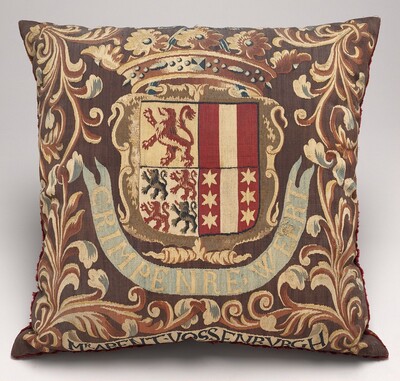
This is a photograph of a decorative embroidered cushion. The cushion features a detailed coat of arms in the center, showcasing a lion, stars, and various stripes and patterns within an ornate shield. The crest is surrounded by floral and scroll motifs in colors like gold, red, blue, and brown. The design includes a banner below the shield with text. The craftsmanship is intricate, highlighting woven patterns and textures.

Tapestry-covered Cushion

Netherlandish 17th Century

The sculpture is of a traditional ceramic vase featuring a bulging body with an elongated, narrow neck. The vase is primarily white and is adorned with an intricate pattern of blue swirling motifs covering the body and neck. The top of the vase has a band with blue calligraphic characters. Made from what appears to be porcelain, this vase displays a high level of craftsmanship typical of historical Asian pottery. Its glossy finish and classic blue-and-white color scheme give it an elegant and timeless look.

Bottle Vase

Chinese Qing Dynasty

This is a photograph of an ornately embroidered pillow. The pillow features an intricate design with a central heraldic emblem depicting a red lion in a standing pose enclosed within a woven-like fence, topped by a crown. Surrounding this central motif are floral embellishments with leaves and flowers in various colors, including red, pink, blue, and beige, set against a dark background.

Tapestry-covered Cushion

Netherlandish 18th Century

The image is a portrait showing the upper half of a man's body. He is positioned facing slightly to his right, looking towards the viewer. The man's facial features include a prominent mustache and a goatee, with medium-length wavy hair that falls around his shoulders. He is wearing a dark, metallic-looking armor with a high, rounded collar adorned with lace and a sash draped over one shoulder. The background is an ornate oval frame with text inscribed around the edge, and below the oval is a decorative panel with a coat of arms and text in French.

Frederic-Maurice, Duc de Bouillon

Nanteuil, Robert

The sculpture is a profile portrait of a man depicted in relief, facing left. He wears traditional papal attire including a tiara or cap, and a robe with intricate details. The sculpture is dark bronze in color, giving it an aged appearance. The material appears to be metal, likely bronze. There are inscriptions in Latin encircling the figure, the top text reading "CLEM IX PONT MAX A I". The sculpture captures a detailed likeness from the profile view, with distinct facial features such as a bearded face, curls in the hair, and a serious expression.

Clement IX (Giulio Rospigliosi, 1600-1669), Pope 1667 [obverse]

Morone Mola, Gasparo

This is a photograph of a decorative porcelain vase. The vase features intricate and colorful hand-painted designs typical of traditional East Asian craftsmanship. The central part of the vase showcases a scenic landscape with trees, rocks, and water, surrounded by Chinese characters. The top and bottom sections of the vase have decorative bands with a geometric pattern interspersed with floral motifs and circular medallions depicting mythical creatures. The color palette includes greens, blues, oranges, and earthy tones.

Lantern

Chinese Qing Dynasty

This sculpture is a decorative cup. The cup has a uniquely shaped form, with a scalloped rim and a yellow handle crafted in a flowing shape. The exterior is speckled mint green and decorated with various intricate patterns, including yellow flowers and stylized characters or symbols in tan and dark green. The interior is coated with a soft yellow glaze, while the rim is white.

Wine Cup

Chinese Qing Dynasty

The image displays a rural landscape from an elevated viewpoint capturing a village scene. The horizon is high in the image, focusing on the village and farmlands. There are houses with a chimney emitting smoke and a windmill in the distance. The brushstroke style is detailed and delicate, typical of engravings with fine lines depicting textures like thatched roofs and fields. The color palette is monochrome with variations of black and white showing depth and texture. Close by, there are fields with a gate and figures and animals are seen on the village road in the distance.

Fields and a Village Road with Post Mill

Doetechum, Lucas van

This image shows a worn, textured book cover. The cover is a rich brown color with a leathery appearance, displaying signs of age and use through its worn edges and slight scuff marks. The surface has lighter spots indicating abrasions or scratches. The spine of the book is on the left side and appears more worn than the rest of the cover, indicating age and handling.

Romanae Magnitudinis Monumenta Quae Urbem Illam Orbis Dominam Velut Redivivam Exhibent Posteritati Veterum Recentiorumque Quotquat Hac de Re Scripserunt Authoritate Probata Quibus Suffragantur Numismata e Musea Principum Praesertim Fragmenta Marmorea Farnesiana Continent Restituta et Aucta

Lauri, Giacomo

Young Woman

Young Woman

Chinese Qing Dynasty

Four men and one woman gather around a dead man who is dressed in a bright honey-gold cape and pointed hat, his stone-gray face resting on a stump or column in this dark vertical painting. All the people have peachy skin or light skin tinged with green. Shown from the knees up, Saint Gennaro, the dead man, twists and slumps to our right. On the stump, his eyes are closed and his lips parted. His hands are crossed at his waist and bound with rope. He wears a tall hat rising to a peak in the center. His cloak drapes over a white tunic, and red seeps from around his neck. On our right, a brown-haired woman is shown from the waist up, bending down in front of Saint Gennaro’s face. The light falls across the scene from our right, so her profile is in shadow. She holds a silver chalice in one hand and squeezes something, perhaps a rag or sponge, over the chalice with her other hand. A clean-shaven man with dark curly hair stands behind the stump. That man’s body faces us as he leans to our right and tilts his head down over Saint Gennaro, his shadowed face obscured. His left hand is under the dead man’s head and his right hand clutches his own chest. Behind the dead man and to our left, a bald, gray bearded man bends over and spreads his arms wide over and across the saint’s back. His brow is furrowed, and he looks at Saint Gennaro with deep-set eyes. Along the left edge of the canvas, a bald man with a hooked nose and large ears stands and angles his body to our right, his face in profile. He leans back from the dead man, his right hand holding a knife or sword with a bird-shaped hilt. The fourth man close to Saint Gennaro looks on to our right, from behind the stooping woman. The people gathered around Saint Gennaro wear clothes in muted shades of gray, brown, and white. The edge of a building rises up along the left edge of the composition. In front of a distant mountain to our right, more people are gathered, some with swords raised and others looking on with mouths gaping. One faint head, the face painted in tones of ash gray, peeks over the shoulder of the fourth man. Yellow streaks near the horizon also illuminate the undersides of heavy, dark gray clouds above.

The Martyrdom of Saint Gennaro

Preti, Mattia

The sculpture is a vase featuring a rounded body with a long, narrow neck. The vase is primarily made of a white material, and it is adorned with intricate designs. These designs include several black oval and leaf-shaped panels on the vase's body and neck, decorated with vibrant colors such as green, blue, yellow, and white. One of these panels on the body of the vase features a depiction of a snarling blue-and-white dragon with a yellow-and-green face set against a black background. The other visible panels have floral designs in white, yellow, blue, and green. Between these panels, the white body of the vase also appears to have been carved with white swirling floral designs. There are some small spots of brown discoloration on these designs at the bottom of the vase.

Bottle Vase

Chinese Qing Dynasty

The sculpture depicts a figure standing on a decorated pedestal, striking a dynamic pose with one arm raised and the other bent downward. The figure is adorned in a long, flowing garment with a variety of colors and patterns, including green, blue, yellow, and white, with floral motifs in different parts of the attire. The face of the figure is white with delicate features, and the hair is styled upward in a solid black form. The sculpture appears to be crafted from a glazed ceramic material, giving it a smooth and glossy finish, and it is detailed to convey a sense of movement and elegance. The pedestal below features a crisscross yellow and green pattern that complements the colors found in the figure's attire.

Dancing Woman

Chinese Qing Dynasty

The image shows two birds tied together at the feet. The birds have detailed feathers and claws. The color palette includes light beige and dark brown ink for outlining and details, creating a monochromatic look. The birds are positioned in the center, with their bodies overlapping, and their heads facing downwards in the lower half of the composition.

Two Dead Chickens

British 18th Century

The sculpture is a lidded vase with a hexagonal shape and ornate decorations. It features a design of flowers, branches, and birds. The floral patterns are in white and green, and the branches are light brown. The birds are in matching colors. The vase is predominantly yellow with a detailed finial on top of the lid. It is made of glazed ceramic and has a glossy appearance. The body of the vase has intricate patterns, adding texture.

Hexagonal Covered Jar

Chinese Qing Dynasty

Wine Cup

Wine Cup

Chinese Qing Dynasty

The sculpture is a blue vase with a tall, slender neck that widens into a bulbous body before tapering towards the bottom. The vase is made from smooth ceramic material and stands upright with a symmetrical shape, reflecting light.

Amphora Vase

Chinese Qing Dynasty

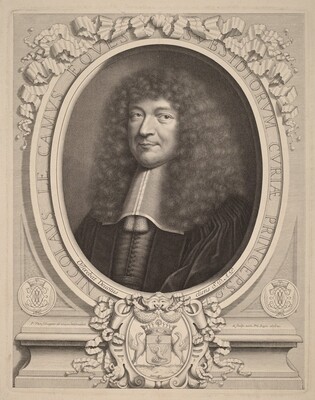
The image shows a man from mid-chest upwards. He is facing forward but slightly turned to his right. The man has a round face with a prominent nose and full lips. He has thick, curly hair extending down to his shoulders. He wears a formal robe with a wide, white collar. Surrounding him is an elaborate oval frame with classical motifs and a coat of arms at the bottom, including two greyhounds and a swan. The background includes decorative engravings and text encircling the figure.

Nicolas Le Camus

Schuppen, Peter Ludwig van

The image shows a portrait of a man positioned directly towards the viewer. He has a pointed mustache, a small goatee, curly hair falling around his shoulders, and sharp facial features. He is dressed in an elaborate garment with vertical stripes and a large ruffled collar typical of the period style. The background consists of a detailed oval frame enclosing the portrait, with the name "PIERRE DE MARCASSVS" inscribed below. The engraving style of the artwork adds a rich texture to both the subject and the surrounding space.

Pierre de Marcassus

Lasne, Michel

This is a print depicting various people on a stage, casting dramatic shadows on the walls. In the bottom left corner, the dark silhouettes of people watch the stage, which stretches diagonally across the scene. A thin arched pole hangs down on the stage, under which three people are gathered, two standing and one sitting, working with a hammer. On the left of the stage are three people dancing together, one person in the center with horns in mid-step, and a person on the right standing next to a goat. There are also two winged cherubs hanging from strings above the dancing figures. The shadows of these people are projected onto the wall or screen behind them, and the shadows of the three people under the arch are massive, taking up most of the print. The backdrop features faint outlines of vegetation, clouds, and a coat of arms. On the right edge, several people peek out from behind the backdrop.

Inleyding tot de Hooge Schoole der Schilderkonst (Introduction to the Noble School of Painting)

Hoogstraten, Samuel van

This is a vase that features delicate white flowers with brown branches and a small gray bird. The vase is predominantly green. At the bottom of the vase there are some tall triangular shapes in lighter shades of green which may be representing the tops of mountains.

Baluster Vase

Chinese Qing Dynasty

The image shows a rustic interior with large objects, including a collection of ceramic pots, bowls, and raw vegetables like cabbages, carrots, and onions in the foreground. The color palette is earthy and warm, with browns, beiges, and muted greens. A table is on the left side of the image where several people are seated, while in the center, a man with his arm around a woman stands in front of a stone archway, surrounded by pottery on a wooden table. In the background, another figure can be seen through a doorway.

Tavern Scene with Standing Couple

Buesem, Jan Jansz van

The image shows a portrait of a man from the waist up, slightly angled to the right but gazing directly at the viewer. He has a high forehead with receding curly hair, a narrow chin, a sharp nose, and a small mustache. He is wearing a formal outfit with a white collar and a cloak. Behind him is a shelf with books, and there is text at the bottom identifying him as Sir Kenelme Digby, aged 62, with a description of his status.

Sir Kenelm Digby

Cross, Thomas

This is a photograph of a hexagonal ceramic cup. The cup has a flat, hexagonal base and a wide opening at the top. The interior of the cup is yellow, contrasting with the exterior decoration. The exterior features intricate designs in muted greens, yellows, black, and white. The designs are floral and abstract patterns. The handle is curved and matches the cup's artistic theme. The style suggests a blend of traditional and artistic elements, focusing on symmetry and color harmony.

Wine Cup

Chinese Qing Dynasty

The image shows a portrait of an elderly man from the waist up, seated in a chair. He is positioned facing the viewer with his right arm resting on the armrest of his chair and his left hand holding a piece of fabric in his lap. The man has a white beard and mustache, deep-set eyes, and a high forehead. His hair is short and covered by a cap. He is wearing a dark, full-sleeved garment with buttons down the front, and a large ruffed collar. A bracelet is visible on his left wrist. On a table around him, several books, writing implements, including a quill, are laid out. The background is a textured, dark surface that contrasts with his clothing and skin, drawing attention to his presence.

Gellius de Bouma

Visscher, Cornelis

The image depicts a portrait drawing of a man's upper body. The man is positioned in a three-quarter view, looking directly at the viewer with a composed expression. He has distinctive facial features including a wide forehead, arched eyebrows, deep-set eyes, a pointed mustache, and a slightly curly beard. His medium-length, curly hair frames his face. He is dressed in a dark garment with a wide, white lace-trimmed collar, and there is a hanging piece of string or tassel on his clothing. The background is plain with a textured appearance suggesting the medium of pencil or charcoal.

Portrait of a Man

Keyser, Thomas de

The sculpture is a bowl-shaped piece with a small opening at the top. It is predominantly a muted reddish-pink color with areas of darker red speckles and is made from a ceramic material. The surface of the bowl features an embossed or carved design that incorporates a swirling pattern. The glossy finish gives the sculpture a refined appearance, and its compact size makes it appear similar in scale to a decorative tabletop item or pottery.

"Beehive" Water Pot

Chinese Qing Dynasty

Square Vase

Square Vase

Chinese Qing Dynasty

The image shows a decorative vase adorned with intricate designs of birds, cherry blossoms, branches, leaves, and rocks. The vase is primarily black with colorful details including blue and white blossoms, white and light blue birds, green leaves, and rocks. The material seems to be ceramic with a glossy finish, and the vase has a wide mouth and a curved form. The contrast between the vibrant colors and the black background makes the design visually striking.

Baluster Vase

Chinese Qing Dynasty

The sculpture depicts a tall black vase with a flared neck. The vase is decorated with the design of blooming flowers and small black birds perched among brown branches. The flowers are in shades of white and blue with pale yellow centers. The bottom of the vase features angular green and blue patterns resembling mossy rocks.

Baluster Vase

Chinese Qing Dynasty

The sculpture is a rounded, bowl-like object with smooth, curved surfaces. It is a uniform, matte white color and looks like it is made of ceramic. Its form is slightly wider than its height, with a softly rounded body that tapers towards a narrow base. The top edge opens smoothly into a circular rim. The sculpture has a simple, minimalist design with gentle curves and a monochromatic finish.

Cup

Chinese Qing Dynasty

The sculpture depicts a vase with an elongated neck opening into a flared rim, a smooth, rounded body, and a small base. It is made of ceramic material with a red and cream glaze and hints of green and blue. The surface has a glossy finish, and the vase stands upright with balanced proportions.

Petal-Decorated Vase

Chinese Qing Dynasty

Vase

Vase

Chinese Qing Dynasty

The sculpture is a globular-shaped ceramic jar with a narrow, slightly elevated neck. It has a smooth surface with an even, light blue color. The jar's shape is symmetrical, with a rounded lower body that tapers up to a smaller, circular opening. The material appears to be a glazed porcelain or similar ceramic, evident from its glossy finish that reflects light subtly across its surface. The overall look of the jar is simple and elegant, with a harmonious form that complements its monochromatic color.

Water Pot

Chinese Qing Dynasty

Two women with pale skin look out at us from the other side of a rectangular window opening with a shadowy interior behind them in this vertical painting. On our right, in the lower third of the composition, one young woman leans toward us over her left arm, which rests along the window ledge. She bends her right arm and props her chin on her fist. She looks at us with dark brown eyes under dark brows. She has shiny chestnut-brown hair with a strawberry-red bow on the right side of her head, to our left. She has a straight nose, and her full pink lips curve up in a smile. She wears a gossamer-white dress with a wide neckline trimmed in dark gray, with another red bow on the front of her chest. Her voluminous sleeves are pushed back to her elbows. To our left, a second woman peeks around a partially opened shutter. She is slightly older, and she stands next to the first woman with her body facing us. She tilts her head and also gazes at us with dark eyes under dark brown brows. She has dark brown hair covered by an oyster-white shawl. She holds the shawl up with her right hand to cover the bottom half of her face. Her mouth is hidden but her eyes crinkle as if in a smile. Her left arm bends at the elbow as she grasps the open shutter. She also wears a white shirt pushed back to her elbows, and a rose-pink skirt. The frame of the window runs parallel to the sides and bottom of the canvas. The room behind them is black in shadow.

Two Women at a Window

Murillo, Bartolomé Esteban

The image contains a circular medallic sculpture with a relief featuring two cherubic figures with wings on opposite sides of an arch. One cherub is blowing a trumpet. Below them is a decorative arch framing a central rectangular section with the engraved text "PRINCE DE CONDÉ. M. 1637." Ornate foliage and scroll patterns decorate the sides, above two meticulously carved human faces in profile. The sculpture has a bronze hue, and the signature "I. DASSIER F." is at the bottom edge of the circle.

Memorial Tablet, with Geniuses of Death and Fame [reverse]

Dassier, Jean

The sculpture is a vase with intricate nature designs. It is predominantly black, with vibrant white, green, and yellow decorations. The vase features a pattern of blossoming flowers and yellow birds, with elements of nature such as rocks and trees at the base. It has a flared top, and is made of a smooth, glossy material. The craftsmanship is detailed, especially the floral and avian elements. The layering of imagery creates depth in the depiction.

Baluster Vase

Chinese Qing Dynasty

This is a decorative ceramic vase. The vase features intricate designs that include large green lotus leaves, white lotus flowers, and a scene of a marsh or pond at the lower part of the vase. A white crane or heron is depicted standing in the water amongst the reeds. The background and top of the vase are dark gray, contrasting with the vibrant greens and whites of the vegetation and wildlife. The top of the vase is rounded, with a short, narrow neck.

Vase, Meiping Shape

Chinese Qing Dynasty
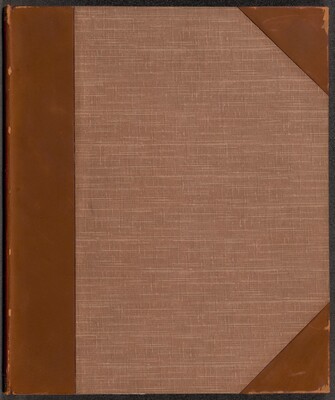
This is a photograph of a book cover. The cover features a textured fabric material in a neutral brownish tone, with reinforced corners and spine made of a smooth, slightly darker brown material resembling leather. The stitching pattern on the fabric gives it a subtle crosshatch design. The book cover does not contain any visible text, illustrations, or embellishments.

Album with engravings from John Leslie's "De Origine Scotorum"

British 17th Century

The sculpture is a bowl-shaped vessel with a wide, slightly rounded body and a narrow opening. It is light blue with a smooth, glossy surface. The form is robust yet elegant. The sculpture is positioned on a flat surface. The light blue color and smooth texture give it a calm and understated appearance.

Brush Washer

Chinese Qing Dynasty

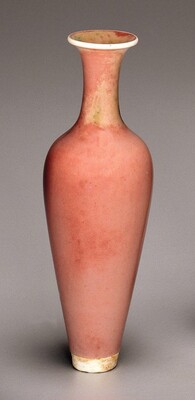
The sculpture is a vase with a long, slender neck and a rounded body that tapers towards the base. The vase is predominantly rose pink in color, with some slight variation on the neck, where there are patches of a peachy shade. There are also small dots of a light greenish color. The rim and base are both white.

Amphora Vase

Chinese Qing Dynasty

Rectangular Vase

Rectangular Vase

Chinese Qing Dynasty

The image displays a portrait of a person from the chest up, facing forward with a slight turn to the right. The individual has distinct facial features and long, curly, white hair. They wear a dark coat with a vest, a white neck scarf, and the clothing has visible buttons. The background is a shaded oval shape. Below the portrait, there is text in a decorative script that includes the name "Edmundus Halley."

Edmund Halley

White, George

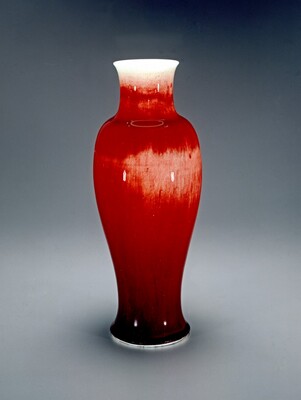
This large ceramic vase has a deep red glaze that fades to white at the top rim. The vase has a smooth, slightly elongated shape with a narrow neck and a round base. Around the middle section of the vase there is a lighter red section, and towards the bottom the red transitions into a dark, almost black shade.

Vase, called "The Flame"

Chinese Qing Dynasty

In the center of this painting, a large animal carcass is hanging upside down from a wooden frame, with several people attending to it. The carcass is light pink and has been cut open to reveal white ribs, red muscles, and purple organs. On the far left, a young boy stands next to a barrel and a basket, holding several small knives. To the right, a man in a red cap and white apron observes the carcass while holding a drink. An older man in a furred cap and dark clothing looks towards him and holds one edge of the carcass. On the other side of the animal, a young boy blows up a round object. Two women peer out from the doorway of a wooden building in the background, one holding a basket full of what looks like meat. Behind this group of people are several brown structures and a bare tree against a light pink sky.

The Slaughtered Hog

Victors, Jan

This is a photograph of an ornamental cushion with a heraldic emblem. The cushion features a richly embroidered coat of arms with two golden lions rampant on either side of a red shield adorned with three six-pointed stars arranged vertically. Above the shield is a crown-like adornment surrounded by circular patterns. The backdrop is a deep blue fabric draped to mimic curtains or banners. The top of the image reads "GOVDA" within an ornate scroll-like design, and the bottom bears the name "MR. REYER VANDER BVRCX."

Tapestry-covered Cushion

Netherlandish 18th Century

This is a vase with a bulbous body tapering towards a slightly flared rim. It is coated in a vivid green glaze with a crackle pattern. In some areas, the green is lighter, accentuating the fine lines on the surface of the vase. The rim of the vase is white.

Vase

Chinese Qing Dynasty

The image shows a tall, elegant vase with a wide, flaring mouth and a narrow neck, which expands into a rounded bulbous body with a slightly ribbed pattern at the base. The vase has a soft, pale green color. Positioned centrally within the image, the vase stands upright and occupies the majority of the frame, set against a neutral gray background.

Petal-Decorated Vase

Chinese Qing Dynasty

The sculpture is a vase with a long, narrow neck that gradually widens towards the base. It is a vibrant green color with a crackled glaze which creates small lines across the surface. The rim of the vase is white. The vase is standing upright and casting a slight shadow below it.

Vase

Chinese Qing Dynasty

The image shows a close-up of a worn and aged surface, possibly from an old book or manuscript. The surface is textured, with signs of wear, discoloration, and brownish stains resembling foxing. There are frayed edges and slightly bumped corners, indicating long-term handling. The photograph conveys historical value and age through the weathered material.

Ragguaglio della solenne comparsa, fatta in Roma gli otto di Gennaio MDCLXXXVII dall'Ill. Conte di Castelmaine ambasciadore straordinario della Sagra Real Maestà di Giacomo II, all'udienza di Papa Innocenzo XI

Westerhout, Arnold von
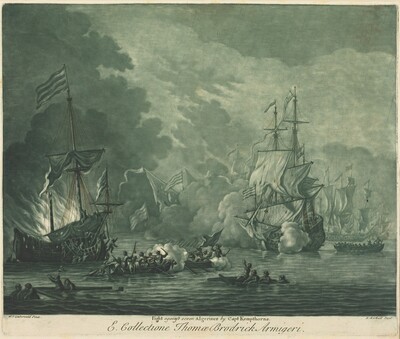
The image shows a maritime battle scene with ships on fire and engaged in conflict. The point of view is from the water level. Small boats filled with figures row away from larger ships. The style is that of a classical painting with billowing smoke and churning water created using soft, flowing brushstrokes. The color palette consists of muted sea greens and grays, creating an overcast atmosphere. A large ship with sails unfurled is on the right, with smoke trailing from various spots. Close to us, a smaller boat is filled with individuals involved in the fight. The background includes large clouds adding to the scene's drama.

Fight against Seven Algerines

Kirkall, Elisha

This is a drawing of a skeletal figure in a sarcophagus with the inscription "VANITAS ET STRVA." The image contains a skeleton lying within a sarcophagus or open coffin, along with symbols of vanity and mortality like a skull and a broken urn. To the right, a goat is next to scattered book pages. In the background are a stone wall and trees. This scene is common in vanitas art, reflecting on the fleeting nature of life and possessions.

Democritus Meditating

Schönfeld, Johann Heinrich

This is a cushion with a coat of arms that includes a crowned shield displaying a lion. The shield is red with a golden lion, and it is topped by a golden crown. The lion is raised up on its back paws, holding a group of arrows in one front paw and a sword in the other. There appear to be two crossing anchors behind the shield, and a brown fence circling the bottom of the shield, inside of which is a patch of green grass. The background is deep green. The letter "A" is embroidered in the top corners of the cushion.

Tapestry-covered Cushion

Netherlandish 18th Century

This is a drawing of a stone statue in a forested area. The statue resembles a figure emerging from rocky formations with water cascading down like a waterfall from its body. The image captures the detailing of the stone structure and the dense forest surrounding it, with tall, narrow trees framing the scene. To the right, a stone balustrade runs alongside a pool of water, leading the eye into the background, which includes architectural elements like a pathway and smaller sculptural features. The atmosphere is serene and timeless, blending nature with human artistry.

Colossal Statue of the Apennines

Della Bella, Stefano

The image depicts an engraving of a man from the chest up. He is positioned facing slightly to the right with his head turned toward the viewer. He has long, curly hair that reaches his shoulders and frames his face. His facial features include a strong jawline, a straight nose, and direct gaze. He is wearing an elaborately patterned necktie and a garment typical of the late-17th century, with visible layers and intricate designs. The scene is framed within an ornate border with scrollwork and cherubic figures. The background is dark, highlighting the details of the man's attire and the frame. There are no visible jewelry or objects being held by the man.

Dr. John Browne, Surgeon

White, Robert

Shou Lao, the God of Longevity

Shou Lao, the God of Longevity

Chinese Qing Dynasty
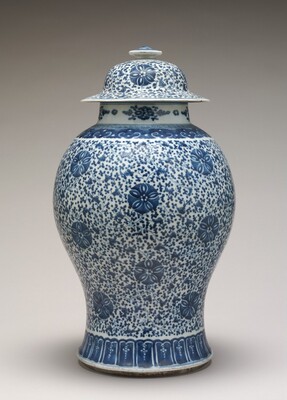
This is a photograph of a decorative lidded porcelain vase with blue and white patterns. The vase has an intricate floral design painted in shades of blue against a white background. The body of the vase tapers down to a narrow base and is topped with a fitted lid that has a small finial at the top. The patterns consist of floral motifs interspersed with small dotted designs. The blue used is a deep cobalt shade commonly associated with traditional Chinese porcelain.

Blue and White Jar with Cover

Chinese Qing Dynasty

The sculpture is a round, lidded box with a smooth surface. It has a muted red and beige color palette. The top is primarily red, blending into a creamier beige near the edges. The lid fits snugly over the base, which has red patterning along the upper edge. The sculpture is made of ceramic material. The form is simple and streamlined, without intricate details, emphasizing the color gradient on its surface.

Covered Box for Seal Paste

Chinese Qing Dynasty
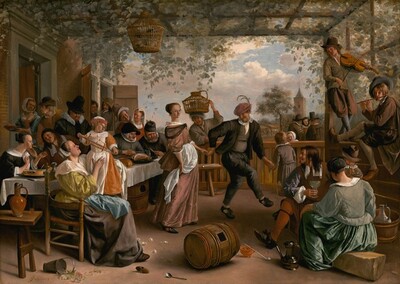
More than a dozen light-skinned men, women, and children eat, drink, talk, and make music around a dancing couple under an arbor in this horizontal painting. Most of the people are dressed in muted tones of green, gray, and black. The patio-like space is enclosed by a railing along the back and a half wall to our right. Sage-green vines and leaves covering the roof-like trellis hang down. Ten men and women sit or stand closely around a long table along the left, next to the exterior wall of a red brick building. A woman sitting in a wooden chair at the end of the table closest to us wears a flax-yellow gown with a wide white collar and a starched white cap. She smiles up at the child she braces in her lap. The child stands and holds a toy in both hands and looks over one shoulder to our right. The child wears a carrot-orange gown with a white pinafore. Two men lean out of open windows at the far end of the brick building, and the people along the table drink, smile, or look on as a man in the center leads a woman by the hand to an open spot under the arbor. He wears a charcoal-gray suit, and a muted pink cap is pulled low over his eyes. He has a long, hooked nose, and light glints off teeth in his smiling mouth. The woman is pulled behind the man, so she stands flat-footed to our left of him. She faces our right but turns to looks at us from the corners of her dark eyes. Her light brown hair is gathered at the back of her head under a pearl-lined covering. She wears a dusty rose-pink gown with a sheer black shawl around her shoulders and white apron at her waist. Beyond the back rail, a man smiles widely as he balances a covered basket containing a gray chicken with one hand on his head. Nearby, a boy on our side of the rail talks with a little girl across the railing, who smiles back. Two men and a woman wearing a black head covering talk a short distance away. Close to us, a man, woman, and child in the lower right corner sit near two young men perched on the half wall, one playing a violin and the other a flute. A gleaming pewter ewer, a wooden barrel with a square opening, a white pipe, a terracotta bowl, broken eggs, a spoon, and an overturned pail of flowers lie scattered across the foreground of the patio. The artist signed and dated the lower left, “JSteen. 1663,” with the J and S overlapping.

The Dancing Couple

Steen, Jan

The sculpture is a relief profile of a man with long, wavy hair cascading down his shoulders. The material of the sculpture appears to be a metallic alloy, giving it a silvery or bronze patina. The artwork is a bas-relief with intricate detailing in the facial features, hair, and gown attire.

Louis II de Bourbon, 1621-1687, Prince de Condé [obverse]

Dassier, Jean

This is a drawing of a mythological scene with figures and cherubs. It features a central figure surrounded by several cherubs and mythological creatures within a dynamic composition. The cherubs are depicted with wings, bows, and arrows, floating in the sky amidst clouds. Below, a central figure stands poised amidst a turbulent group of mythological beings that include mermen and sea creatures. The style of the drawing is reminiscent of classical or Renaissance art, with detailed line work and a sense of movement captured in the figures' poses and drapery.

Psyches et Amoris ...; Galeriae Farnesianae ...; Barberinae avlae fornix

Various Artists